
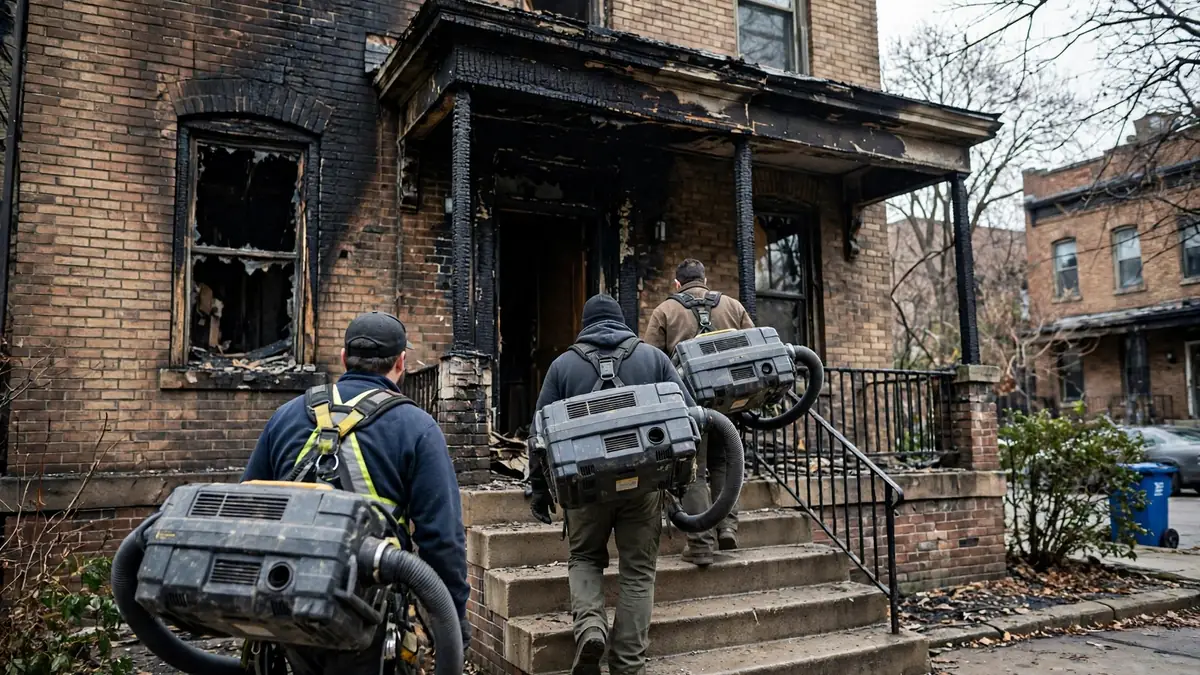
Smoke · Soot · Water · Board-up · Chicago
Chicago fire damage restoration,one call to get started
A fire leaves more than burned rooms: smoke film on every ceiling, soot in the ducts, water from the hoses in the floors below and openings that let the weather in. One call connects you with an independent restoration contractor who works on Chicago homes, from bungalows and greystones to lakefront condos.
Wait for the Chicago Fire Department to release the building before anyone goes back in.
- Smoke and soot cleanup
- Firefighting water drying
- Board-up and roof tarping
- Odor and duct cleaning
- Fire, smoke and waterCleanup, drying, odor and board-up after house and apartment fires.
- Independent contractorsAsk about IICRC training, licenses and insurance; this site shows you what to check.
- Across ChicagoFrom the Northwest Side bungalow belt to Loop high-rises.
Key facts: Home
- Smoke residue differs by what burned: dry soot from fast fires, sticky residue from plastics, and thin protein film from kitchen fires.
- The IICRC S700 standard covers fire and smoke restoration, from assessment and source removal to HVAC, odor and contents [1].
- EPA advises drying water-damaged materials within 24 to 48 hours to prevent mold [2].
- Illinois insurance guidance says to make temporary repairs, photograph damage and keep damaged items for the adjuster [3].
- Chicago has more than 80,000 bungalows, mostly brick over full basements, where smoke and water follow familiar paths [4].
Services
Fire restoration services you can be connected with
Restoration after a fire is several jobs done in the right order. These are the ones Chicago homeowners and renters most often need.
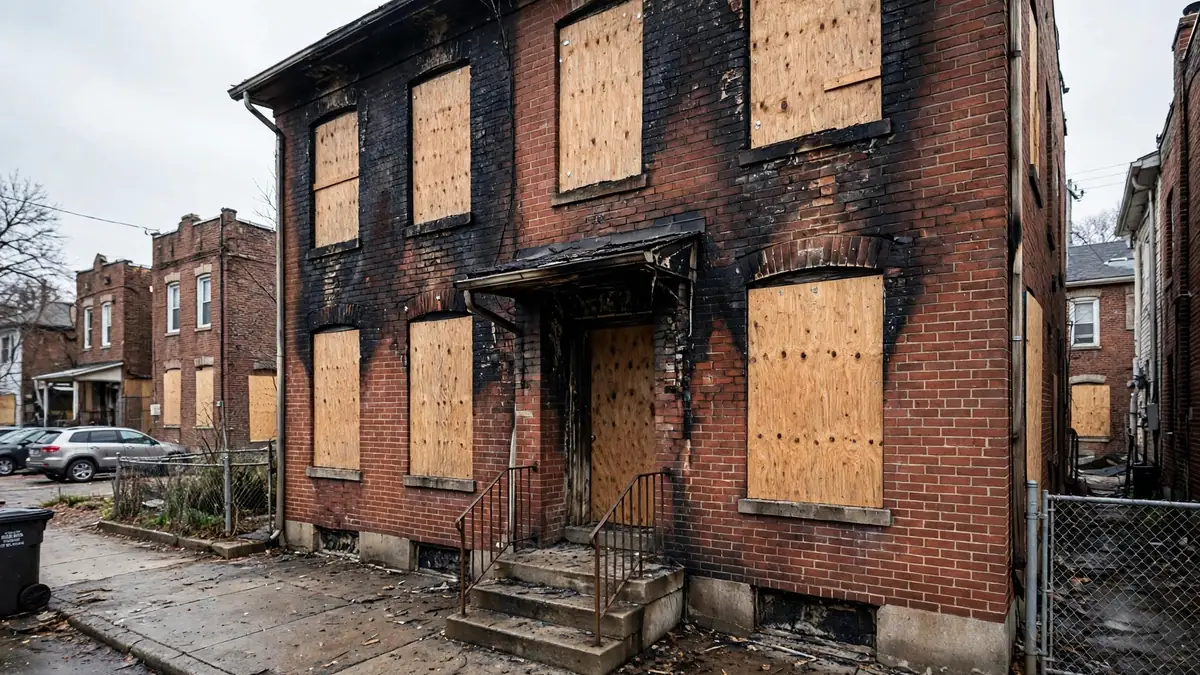
Board-Up and Tarping
Securing broken windows, forced doors and roof openings after a fire so weather, intruders and further loss stay out.
Explore service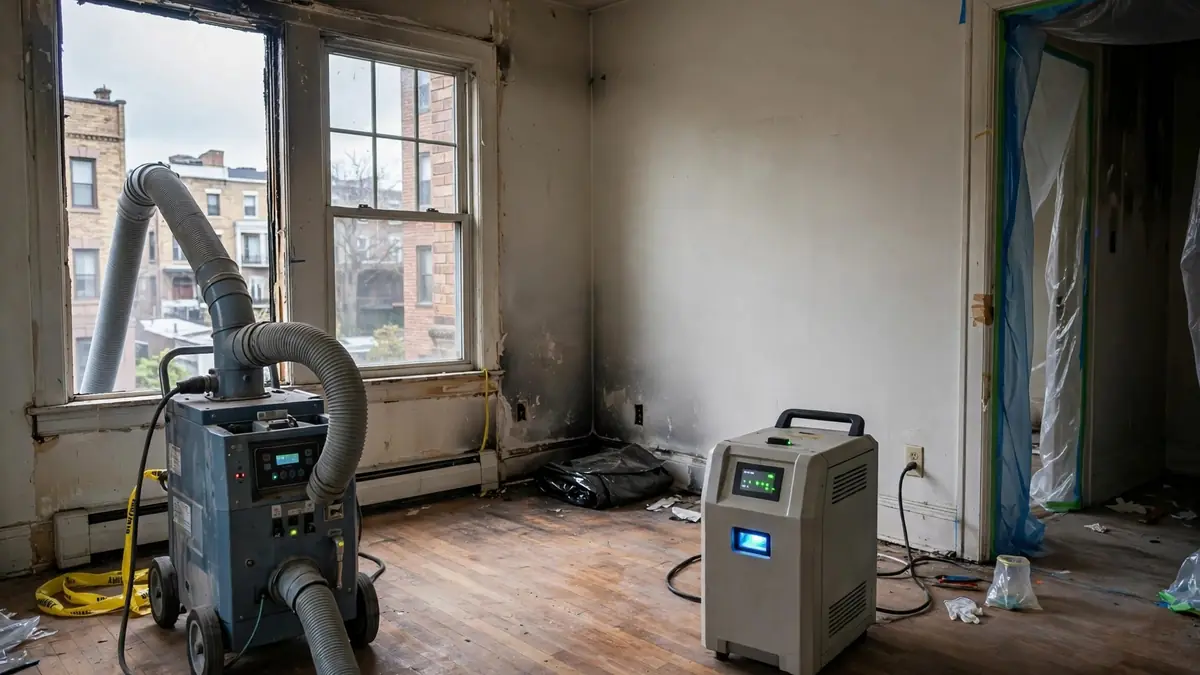
Odor Removal
Finding and removing the sources of smoke smell in walls, insulation, ducts and belongings, then neutralizing what remains.
Explore service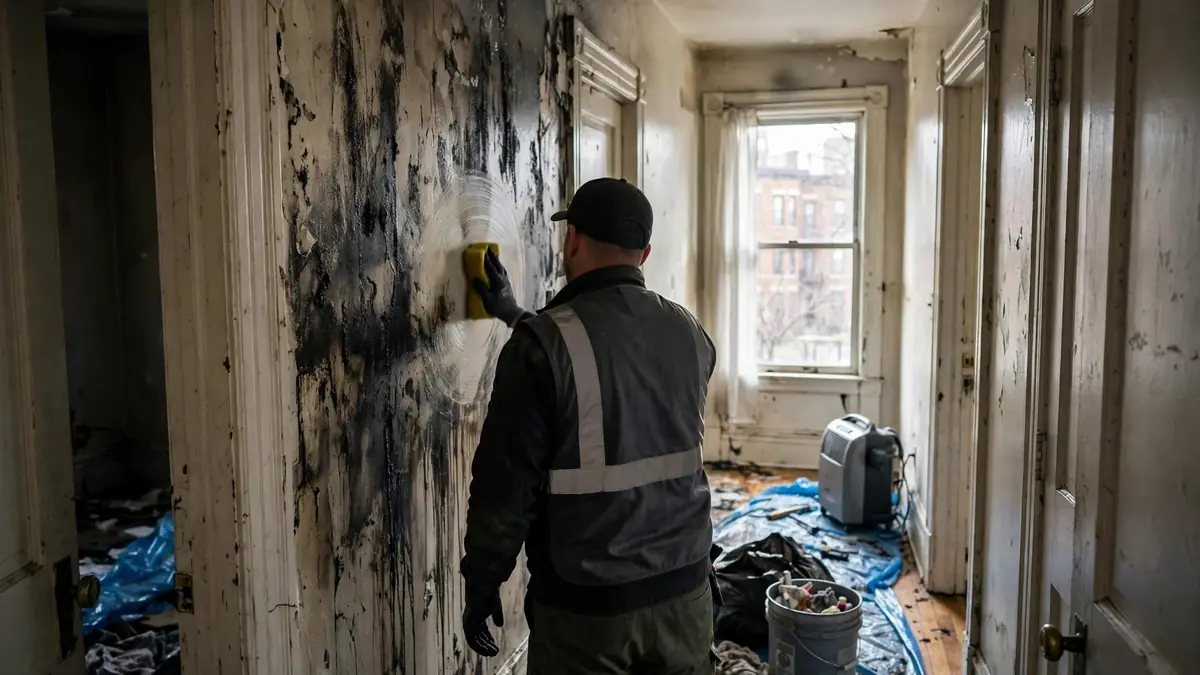
Smoke Damage Cleanup
Residue cleaning on walls, ceilings, trim, cabinets and belongings after a fire, matched to the type of smoke that burned.
Explore service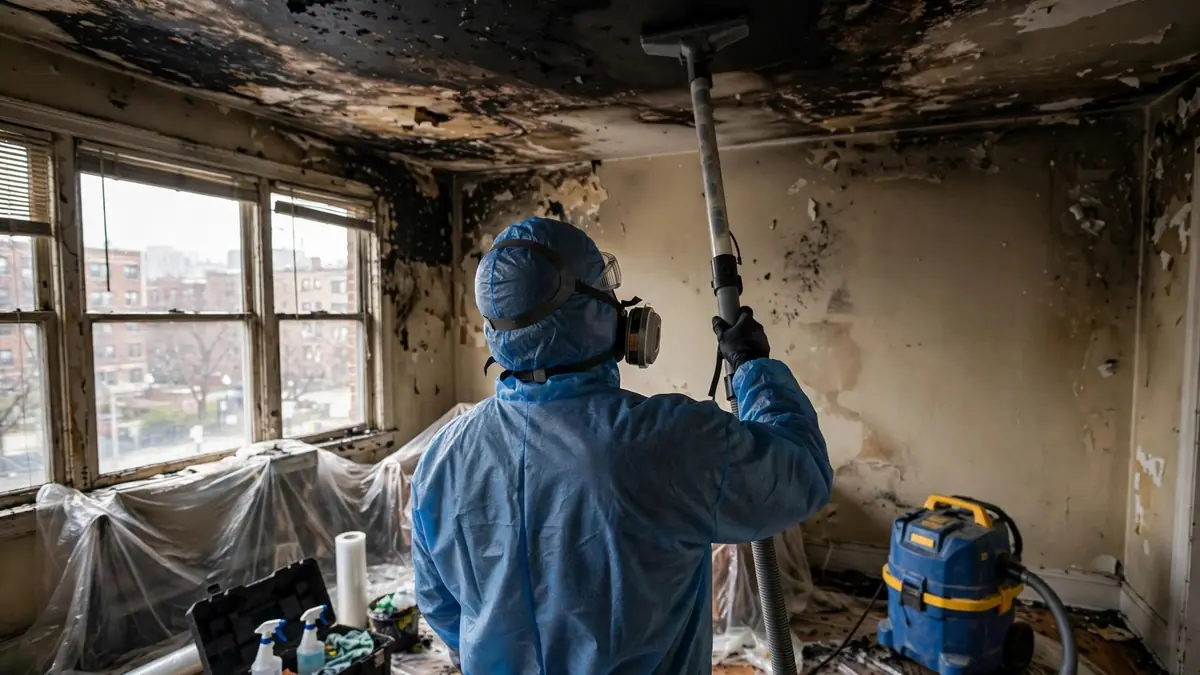
Soot Removal
Removing black powdery or oily soot from walls, ceilings, masonry, floors and fixtures without smearing it deeper.
Explore service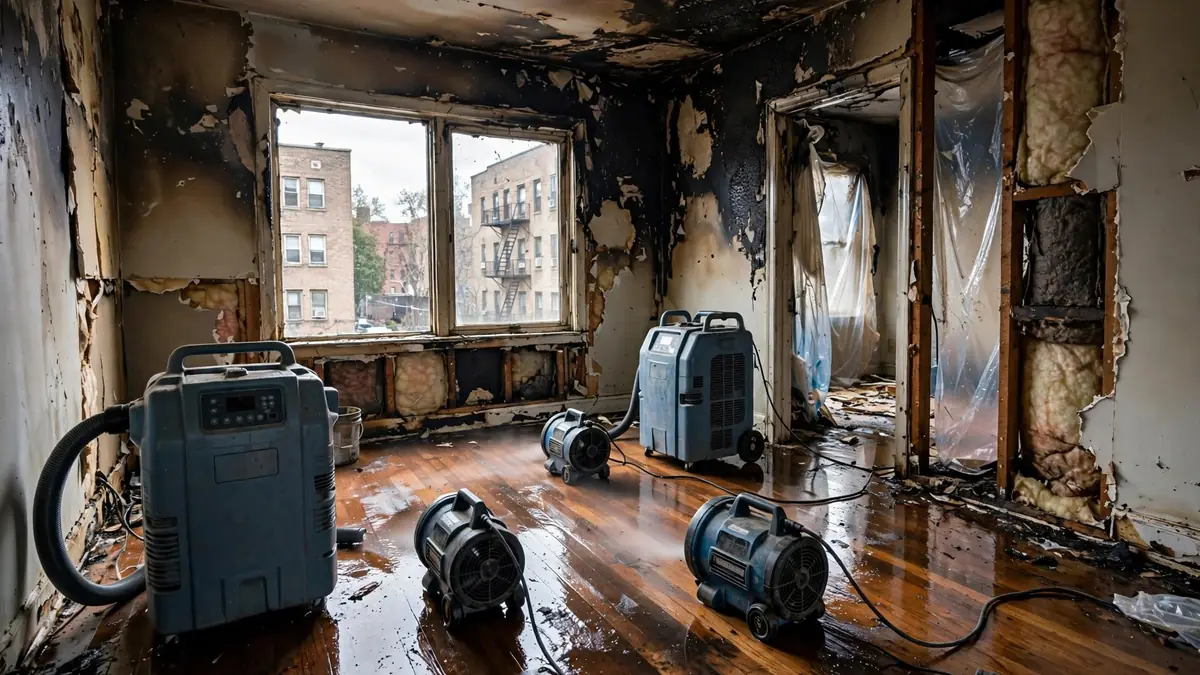
Water Damage From Firefighting
Extracting and drying the water left by fire hoses and sprinklers in floors, plaster, basements and the units below.
Explore service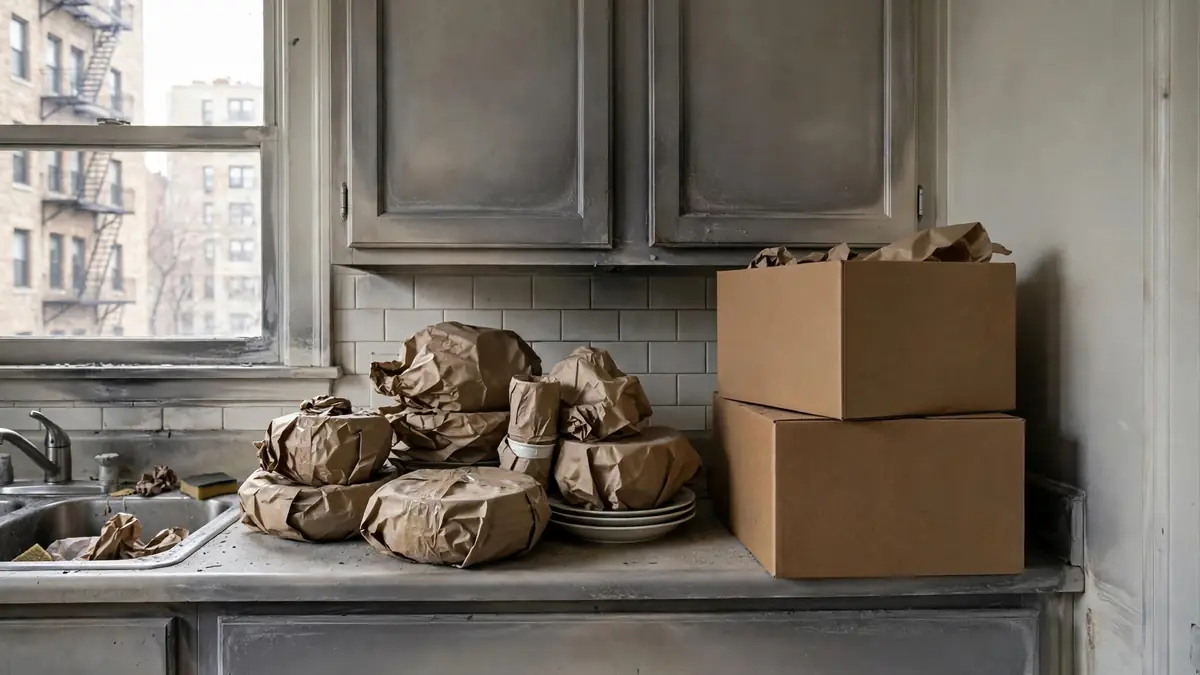
Contents Cleaning and Pack-Out
Inventorying, packing, cleaning and storing furniture, clothing and belongings so they can be restored while the house is repaired.
Explore service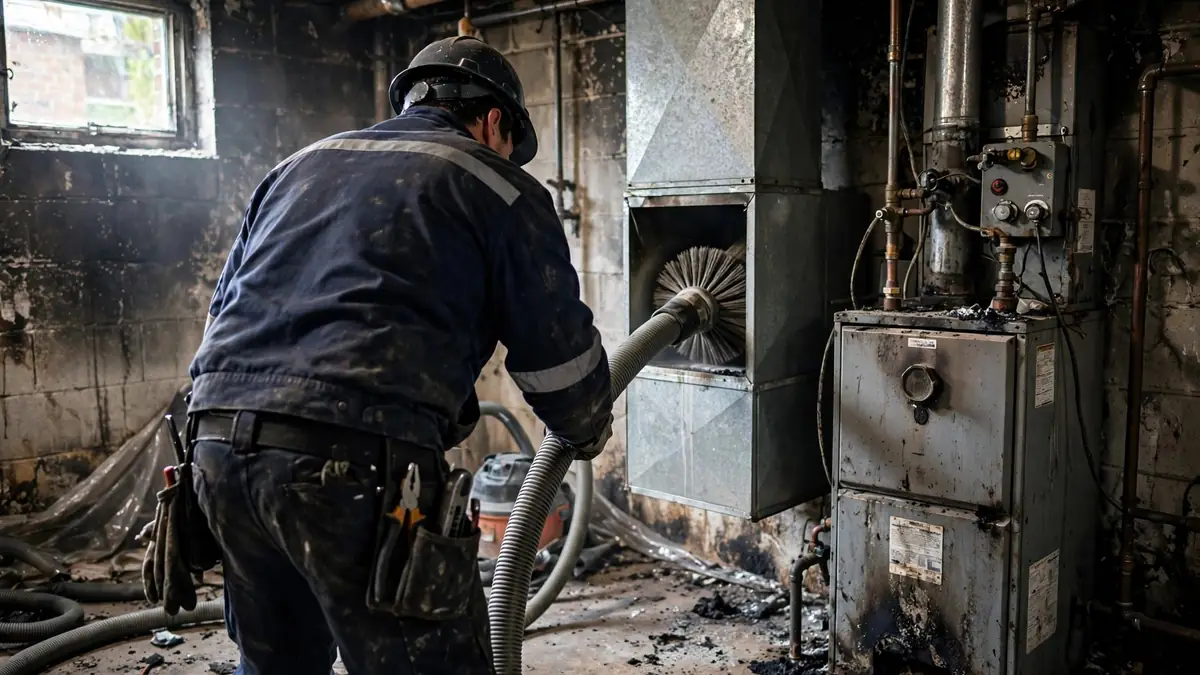
Duct Cleaning After a Fire
Cleaning smoke and soot out of ducts, registers, the furnace blower and air handler so the heating system stops spreading residue.
Explore service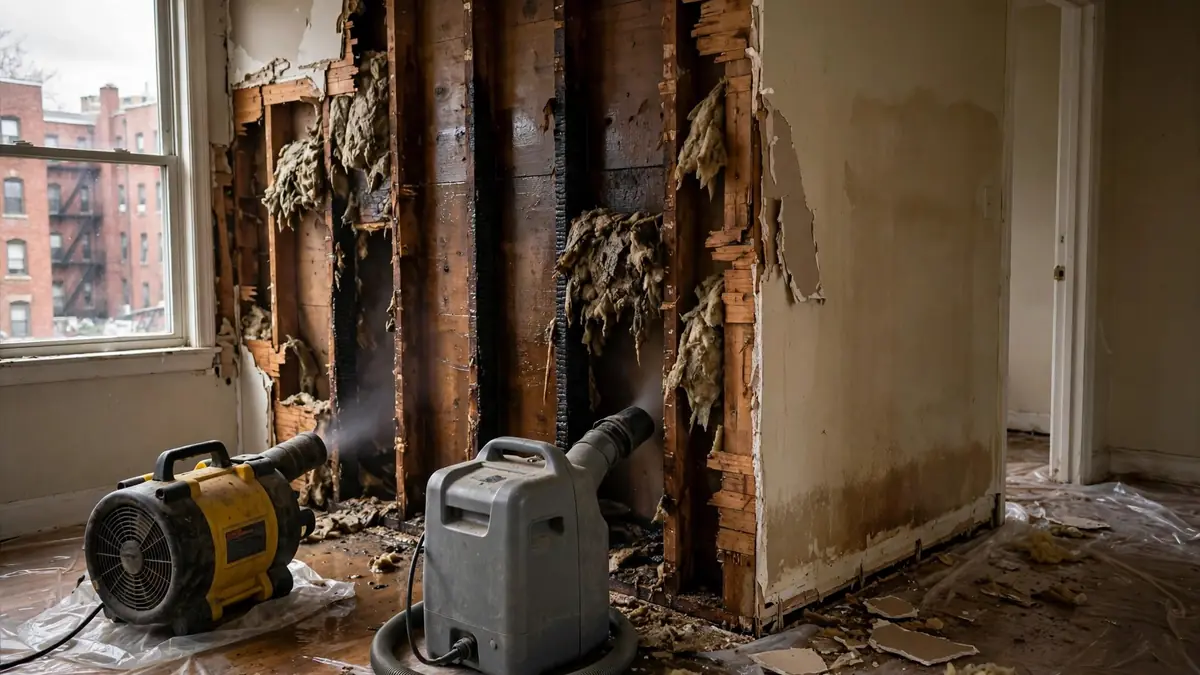
Structural Drying
Drying framing, subfloors, plaster and wall cavities soaked during firefighting, measured until they are back to normal moisture.
Explore service
Safety checklist
Smell gas, or is the building still unsafe?
Leave the building, then call 911 and Peoples Gas from outside. Do not switch lights or appliances on or off, and do not go back in until the fire department says it is safe [5].
- Do not turn utilities back on yourself
- Stay out from under sagging, wet ceilings
- Keep the furnace off until it has been checked
Before and after
What thorough smoke cleanup changes
The same kitchen after a stovetop fire, before cleaning and after cleaning, sealing and repainting.
 BeforeAfter
Where to start
What are you dealing with after the fire?
Pick the problem closest to yours. Each page explains what is happening and how the work is done.
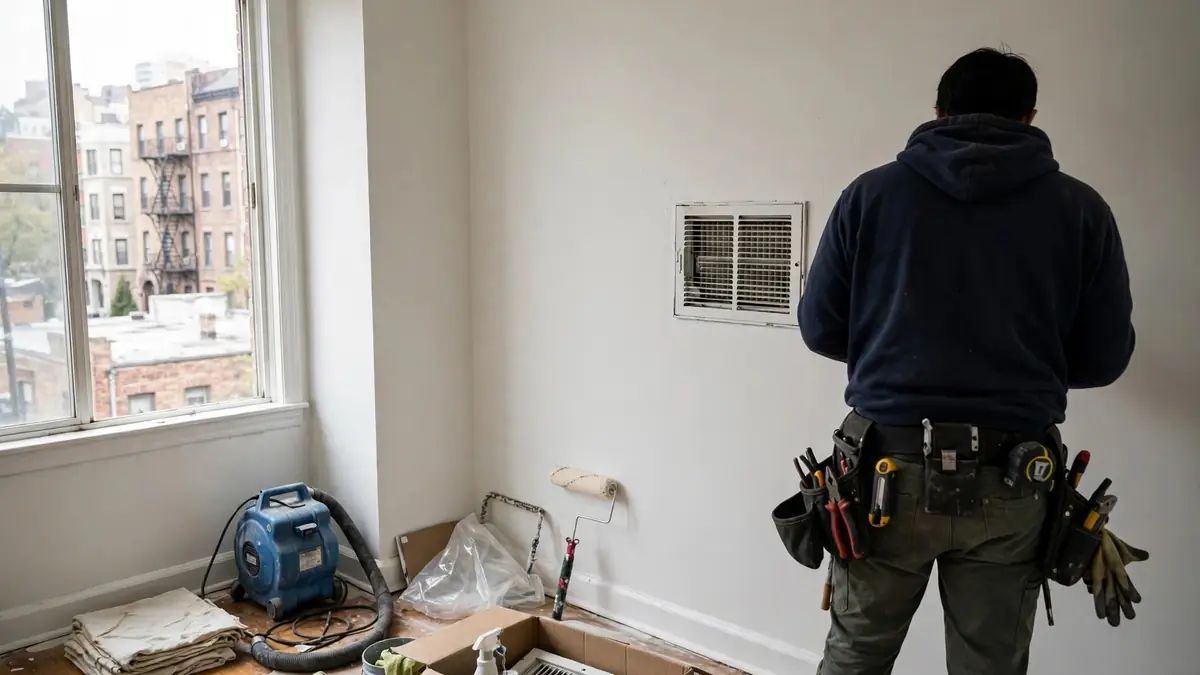 1 / 6
Act today
Smoke film and staining
Gray bands on ceilings, haze on glass, yellowed plastics.
Why it spreads
Why fire damage reaches rooms the fire never touched
Hot smoke rises, spreads across ceilings and settles on any cooler surface, which is why a kitchen fire can leave a gray band in every room on the floor. It rides the forced-air system into bedrooms, climbs balloon-framed walls into the attic and moves up shared stairs into the next unit of a two-flat or courtyard building.
Water does the opposite. Hoses and sprinklers soak the fire area, and gravity carries that water through floors into the ceilings, walls and basement below. In a Chicago bungalow, the full basement collects it; in a three-flat or tower, the units underneath do.
Good restoration follows both paths. A contractor who checks only the burned room will miss the residue in the ducts and the wet plaster downstairs, and those are the problems that come back as odor and mold.
 Smoke goes up, water goes down
Before and after
More fire restoration jobs, side by side
Typical fire restoration work in Chicago homes. Each pair shows the same space from the same angle. Example images, not photos of specific jobs.
- BeforeAfter
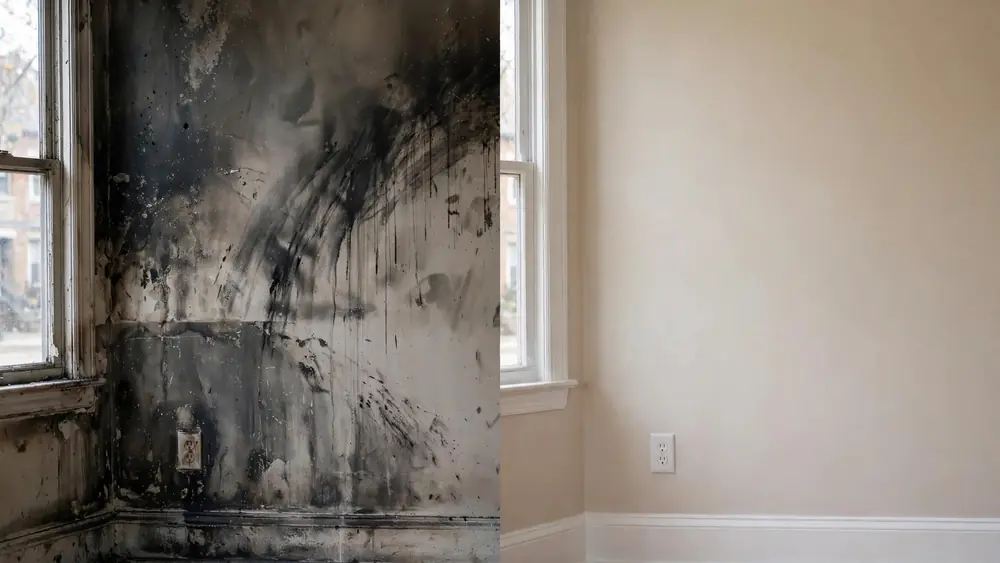
Living room soot
Walls and ceiling vacuumed, dry-sponged, washed, sealed and repainted.
- BeforeAfter
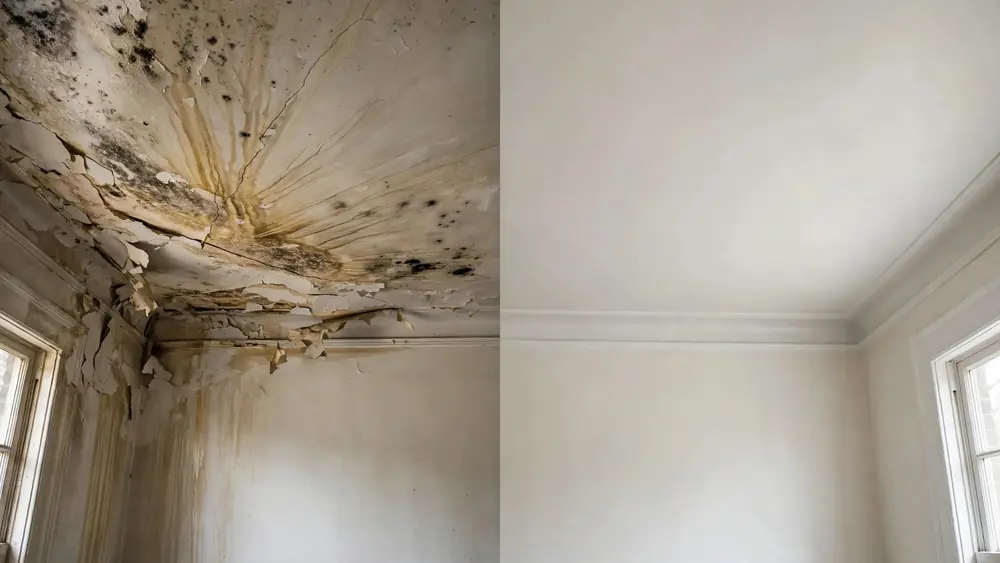
Ceiling below the fire
Firefighting water drained, the plaster dried and repaired.
- BeforeAfter
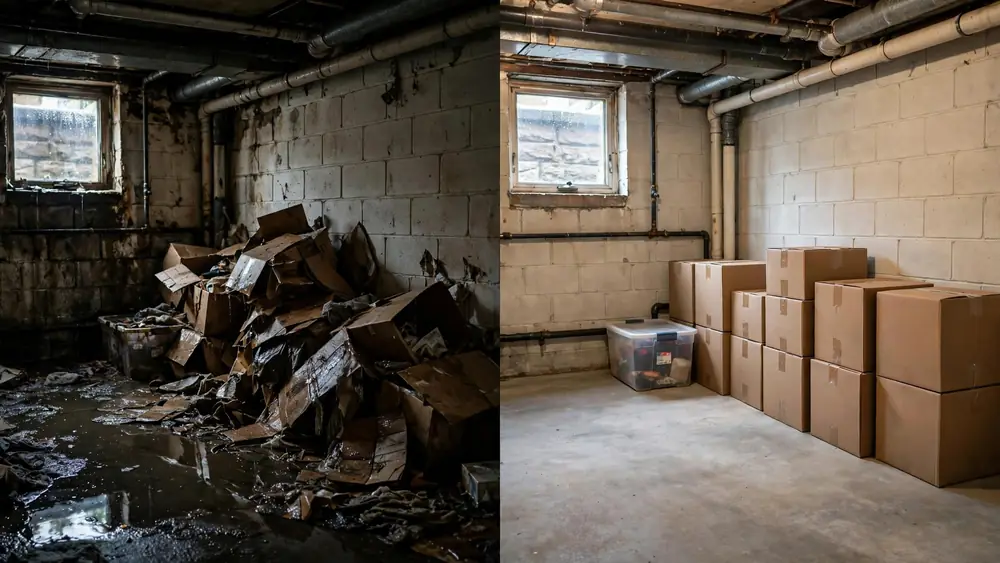
Bungalow basement
Hose water extracted, wet finishes removed and the masonry dried.
- BeforeAfter
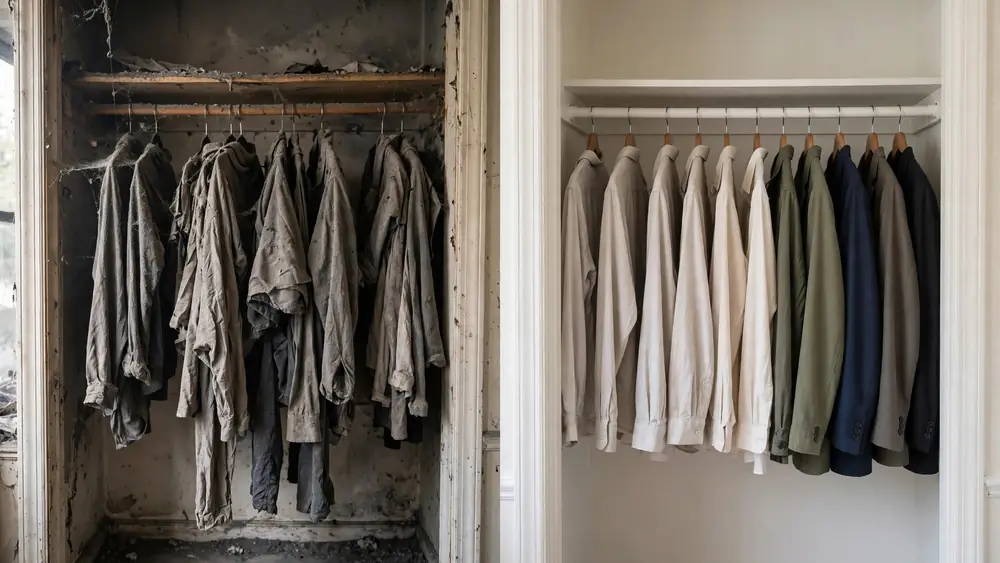
Closet and clothing
Clothing cleaned for smoke residue and the closet walls cleaned and sealed.
- BeforeAfter
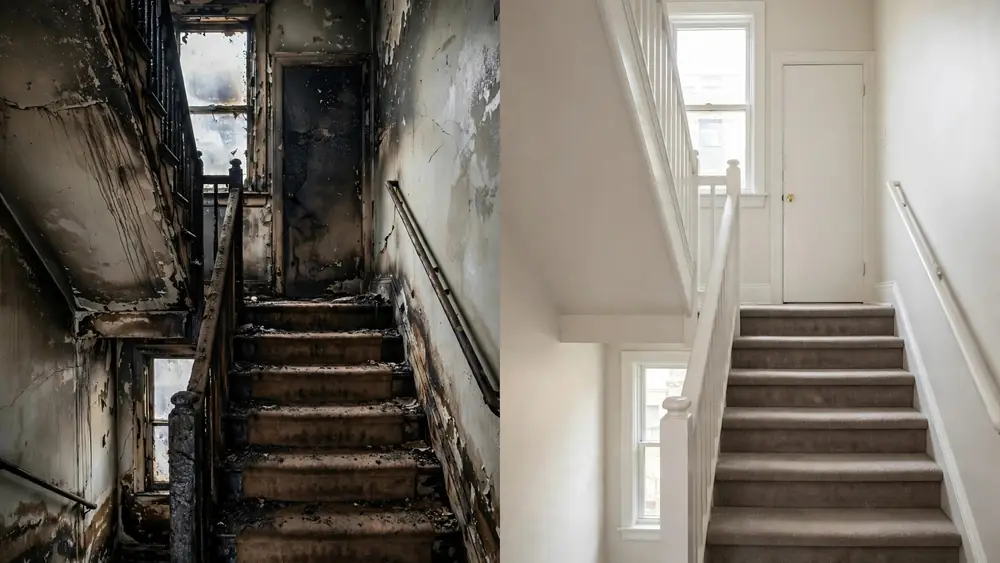
Shared stairwell
The stair between two units cleaned so smoke smell stops spreading.
- BeforeAfter
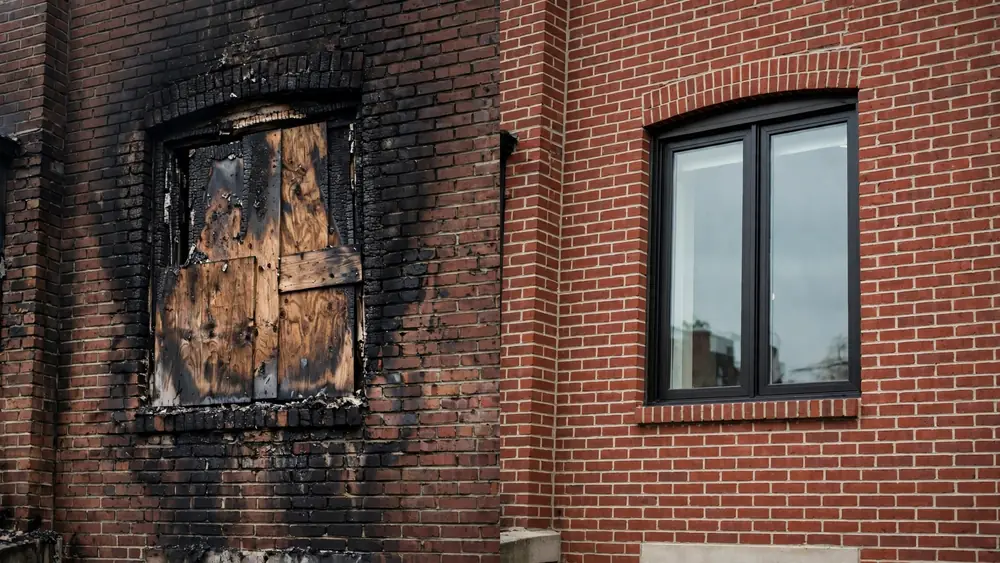
Board-up to new window
Temporary board-up until a permanent replacement window was installed.
Example images, not photos of specific jobs. Every job depends on the property and the damage.
The order of work
How fire restoration usually unfolds
Every fire is different, but the sequence is fairly consistent.
- 1
Release and safety
The fire department releases the building and utilities are confirmed safe.
- 2
Document
Photos and video of every room before anything is cleaned or discarded [3].
- 3
Secure
Windows, doors and roof openings are boarded or tarped.
- 4
Dry
Water is extracted and the structure dried with measured, daily readings [2].
- 5
Clean
Soot and smoke residue are removed dry first, then wet, from the top down.
- 6
Remove odor sources
Insulation, ducts and porous materials are cleaned, removed or sealed.
- 7
Repair
Drywall, floors, wiring and finishes are rebuilt, with permits where required [6].
How it works
One call, then a contractor who handles fire jobs
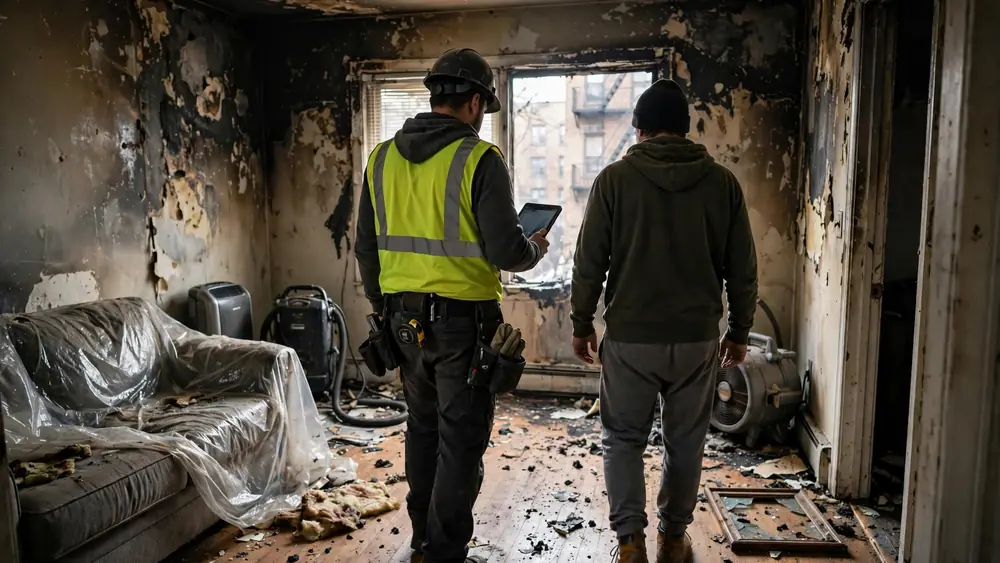
Fire Damage Restoration Chicago is a call-in referral service. When you call, your call is connected to an independent restoration contractor who accepts work in your area, and you talk with them directly on that call about what happened and what the building needs.
Anything arranged after that, including inspections, scopes and the work itself, is agreed between you and the contractor. We do not perform restoration work ourselves, and we do not ask you to fill out forms.
- Describe the fire, the building and what you see
- Talk with the contractor on the same call
- Agree on an inspection directly with them
- Share their written scope with your adjuster
Clean or replace
Clean it, dry it or replace it?
The decision is about condition and safety, not appearance alone.
| Material | Usually cleaned or dried | Usually replaced when |
|---|---|---|
| Plaster walls and ceilings | Smoke film, light soot, water that drains and dries | Detached from the lath, sagging or charred |
| Drywall | Light smoke on sealed paint | Soaked with sooty water, sagging or charred |
| Hardwood floors | Wet floors dried with floor systems, then refinished | Badly cupped, split or burned |
| Insulation | Rarely | Smoke-soaked or wet, which is most of the time |
| Metal ductwork | Cleaned under negative pressure | Flex duct and lined duct with heavy residue |
| Clothing and linens | Specialized laundering | Charred or melted |
| Mattresses and foam | Rarely after heavy smoke | Strong odor remains after cleaning |
Your adjuster should see damaged items before they are thrown away.
Service areas
Fire restoration across Chicago neighborhoods
Chicago's housing changes from neighborhood to neighborhood, and so does how a fire spreads. These pages cover what is different in each covered area.
 Service area
Lakeview
Courtyard buildings, greystone walk-ups, frame and brick houses off Southport, and lakefront towers between Diversey and Irving Park.
Learn more Service area
Logan Square
Greystones and large homes on the boulevards, two-flats and frame cottages in Bucktown and Palmer Square, inside one landmark district.
Learn more Service area
Loop and South Loop
Downtown high-rise condos and rentals, converted loft buildings in Printers Row and former rail-yard neighborhoods like Dearborn Park.
Learn more Service area
Portage Park and Jefferson Park
The Northwest Side bungalow belt: brick bungalows with full basements and half-story attics, two-flats and Gladstone Park Dutch Colonials.
Learn more Service area
River North and Streeterville
Near North Side towers, Gold Coast stone mansions and walk-ups, River North lofts and Old Town row houses south of North Avenue.
Learn more Service area
Uptown and Edgewater
Lakefront towers on Sheridan Road, courtyard buildings and six-flats in Sheridan Park, Buena Park mansions and Andersonville flats.
Learn more
Chicago specifics
What makes fire restoration different in Chicago
Chicago is a city of shared walls and old buildings. Most homes are bungalows, greystones, two-flats, three-flats, courtyard buildings or towers, which means a fire in one home often reaches others through stairs, chases, attics and floors. Restoration here often involves the building owner or condo association, several households and several insurers.
Age matters too. More than 80,000 bungalows went up between roughly 1910 and 1940 [4], and greystones date from the 1890s to the 1930s [7]. Plaster, old wood floors, steam radiators, balloon framing and lead paint are common, and each affects how cleanup is done. Work that disturbs painted surfaces in pre-1978 homes falls under EPA's lead-safe renovation rule [8].
Then there is the weather. A building left open or without heat in a Chicago winter can freeze its pipes within days, adding water damage to fire damage. Lake winds tear loose tarps. Humid summers bring back smoke odor that was not fully removed. Repairs after cleanup, such as new drywall, wiring, porches and roofs, may need Chicago Department of Buildings permits [6], and exterior work on designated landmarks may need extra review.
Guides
Guides for the first days after a fire
Plain-language guides to the decisions people face after a fire. Short answers are collected on the [fire damage FAQ](/faq/).
 Guide
Is it safe to stay after a fire?
How to judge whether you can sleep in a home after a fire: structure, utilities, smoke residue, water and who is most at risk.
Read the guide- Guide
Smoke odor that won't go away
Why a fire smell keeps coming back after cleaning, where it is hiding in a Chicago home, and what actually removes it.
Read the guide  Guide
Soot on walls and ceilings
What black or gray film on walls and ceilings means, why wiping it with water makes it worse, and the right order to clean it.
Read the guide Guide
What to do after a house fire
The first hours, the first day and the first week after a fire in Chicago, in the order that protects your family, your home and your claim.
Read the guide Guide
Working with your insurance adjuster
How a fire claim works in Illinois, what the adjuster needs from you, how contractors fit in, and where to turn if the claim stalls.
Read the guide
FAQ
Questions people ask before they call
Who will I be talking to when I call?
Your call is connected to an independent restoration contractor who accepts work in your part of Chicago. You speak with them directly on the call. This site is a referral service and does not do the work itself.
How soon should fire restoration start?
As soon as the fire department releases the building. Board-up and water extraction should happen first, because wet materials can start growing mold within 24 to 48 hours.
Will my insurance pay for fire damage restoration?
Many homeowners, condo and renters policies cover fire losses, but every policy is different. Report the fire to your insurer promptly, document everything and have your adjuster review the contractor's scope.
Can smoke damage be cleaned, or does everything have to be replaced?
A great deal can be cleaned, including most hard surfaces, plaster, sealed wood and many fabrics. Charred, soaked or deeply odor-saturated materials, insulation and foam are usually replaced.
Why does my house still smell of smoke after cleaning?
Residue remains somewhere, usually in insulation, wall cavities, ducts or furniture. The source has to be found and cleaned, removed or sealed before odor treatment works.
Do restoration contractors handle condo and apartment buildings?
Yes. In multi-unit buildings, contractors typically coordinate with the building owner or association, since smoke and water usually affect shared areas and other units.
Ready when you are
Start your fire damage recovery with one call
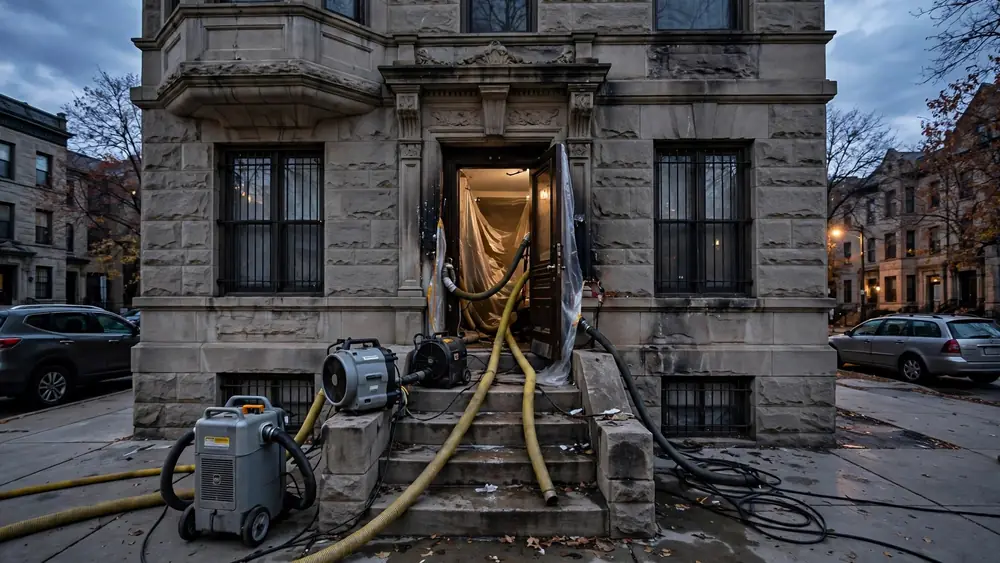
Tell the contractor what burned, where the water went and what kind of building you live in. The call connects you directly with an independent restoration contractor serving Chicago.
Sources and citations
- [1]IICRC — ANSI/IICRC S700 Standard for Fire and Smoke Damage Restoration
- [2]U.S. EPA — A brief guide to mold, moisture and your home
- [3]Illinois Department of Insurance — What to do after an insured homeowners loss
- [4]Wikipedia — Chicago bungalow
- [5]Peoples Gas — Natural gas safety
- [6]City of Chicago — Department of Buildings permits
- [7]Wikipedia — Greystone (architecture)
- [8]U.S. EPA — Lead Renovation, Repair and Painting Program
Keep reading